The Ultimate Guide to the Remesseum — Egypt’s Mortuary Temple of Ramses II
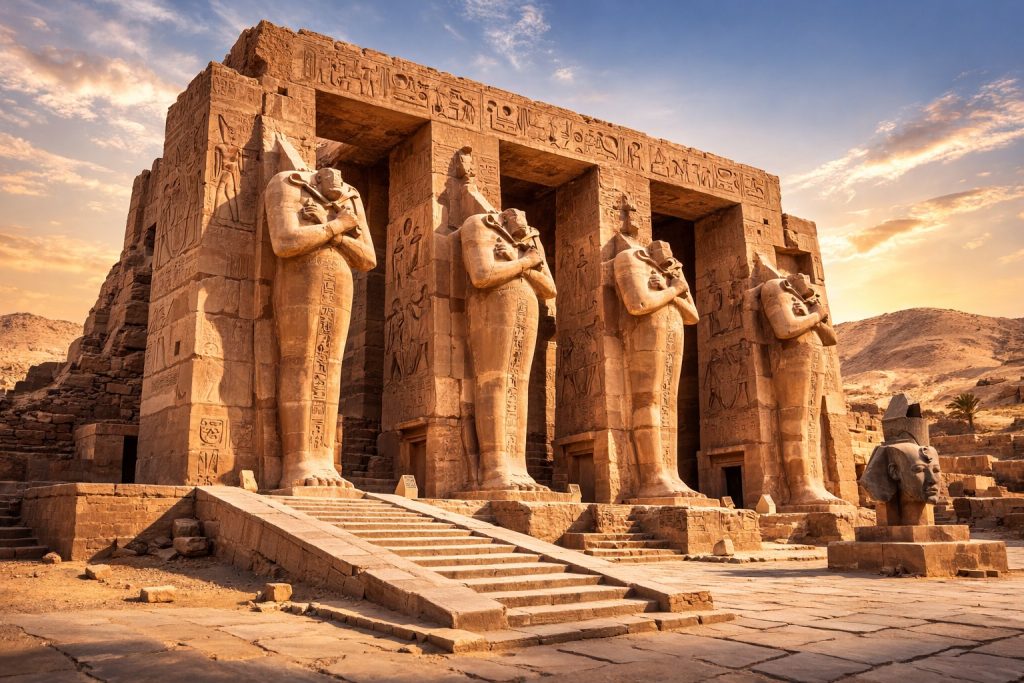
Nestled on the west bank of the Nile near modern Luxor, the Remesseum — also known as the Ramesseum — stands as one of ancient Egypt’s most extraordinary monuments. This vast complex was dedicated to Pharaoh Ramses II (Usermaatra-setepenra), one of the most powerful and celebrated kings of Egypt’s New Kingdom era (1279–1213 BCE). (Encyclopedia Britannica)
Despite centuries of weathering and ruin, the Remesseum still offers breathtaking insights into ancient religion, politics, architecture, and daily life in pharaonic Egypt.
What Is the Remesseum?
The Remesseum is a funerary temple built by Pharaoh Ramses II, designed to honor both the king and the god Amun after the king’s death. Located in the ancient city of Thebes (modern-day Luxor), it was part of a broader tradition where pharaohs commissioned spectacular temples on the Nile’s west bank, symbolizing their passage into eternity. (Encyclopedia Britannica)
The Meaning Behind the Name
- The temple’s original Egyptian name was “House of Millions of Years” — symbolizing eternal life and divine existence. (Madain Project)
- The modern name “Ramesseum” comes from French Egyptologists of the early 19th century, particularly Jean-François Champollion, who first decoded many of the hieroglyphs on the site. (بوابة الأهرام)
Architectural Masterpiece of the New Kingdom
Designed with monumental scale and grandeur, the Remesseum showcases the hallmarks of New Kingdom temple architecture:
Pylons, Courtyards, and Columns
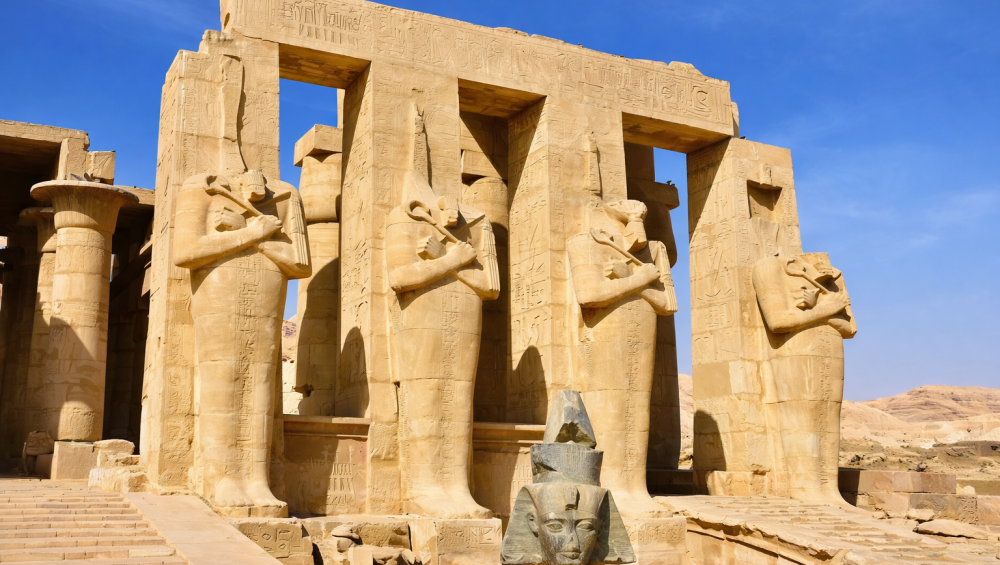
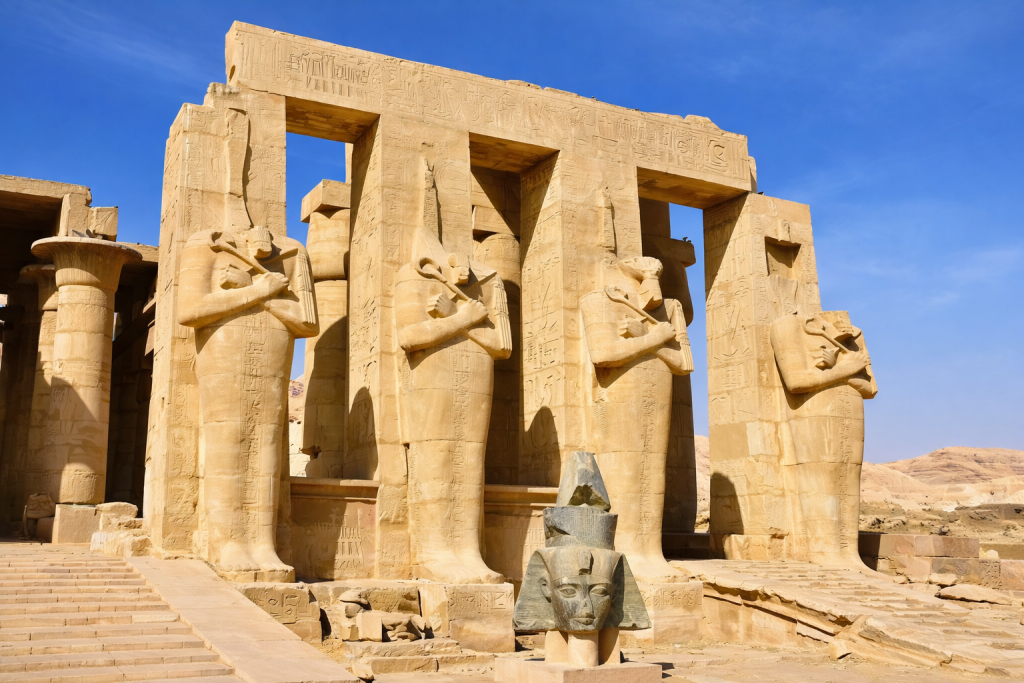
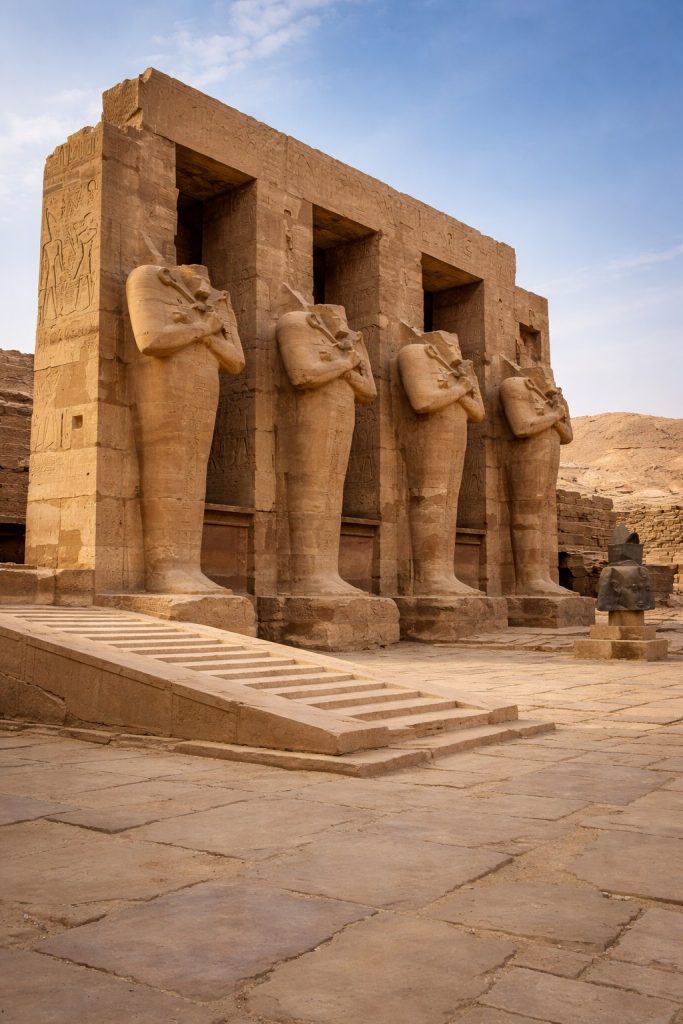
- The temple layout includes grand entrance pylons, open courtyards, columned halls, and inner sanctuaries. (Madain Project)
- The walls are covered with intricate hieroglyphic reliefs depicting battles, religious rites, and royal ceremonies. (Encyclopedia Britannica)
The Colossal Statue of Ramses II
One of the most remarkable features was the massive seated statue of Ramses II, estimated at roughly 17 meters (57 feet) tall. Although now largely ruined, its fragments remain a potent symbol of his power. (Encyclopedia Britannica)
Historical Importance — More Than a Tomb
The Remesseum was not just a funerary monument — it was a political, religious, and cultural hub of great significance:
Chronicle of Military Triumphs
The temple reliefs vividly portray the Battle of Kadesh and other military campaigns, celebrating Ramses II’s political and martial achievements. (Encyclopedia Britannica)
Religious Rituals and Divine Kingship
As a temple dedicated both to the god Amun and to the deified Ramses himself, it was a center for rituals and worship aimed at securing the king’s eternal life among the gods. (Encyclopedia Britannica)
Uncovering the Remesseum — Archaeological Discoveries
Excavations and Finds
Archaeological expeditions, especially Egyptian-French teams, have uncovered:
- “House of Life” — a school or learning center linked to the temple, possibly used for training scribes and priests. (بوابة الأهرام)
- Workshops and storehouses for goods like olive oil, honey, and textiles. (بوابة اخبار اليوم)
- Tombs and burial chambers from the adjacent workers’ village. (نيوز رووم)
These discoveries reveal that the Remesseum was more than a ritual space — it was a community center, involved in education, craft, and economy. (بوابة اخبار اليوم)
Preservation, Damage, and Restoration
The temple endured centuries of erosion, sand encroachment, and human destruction:
Conservation Efforts
Modern archaeological and conservation teams from Egypt, Korea, France, and other partners are actively working to stabilize and restore portions of the complex. This includes slowly rebuilding the grand pylons and preserving existing reliefs. (نيوز رووم)
Remesseum in Culture and Literature
- The Remesseum also struck a chord in Western literature. The broken colossal statue became an inspiration for Percy Bysshe Shelley’s poem “Ozymandias”, a famous reflection on the impermanence of power. (Encyclopedia Britannica)
What Makes the Remesseum Unique?
In summary, the Remesseum stands out because:
- It was a royal mortuary temple of one of Egypt’s greatest pharaohs. (Encyclopedia Britannica)
- Its walls preserve some of the most dramatic relief artworks from antiquity. (Encyclopedia Britannica)
- It functioned as a religious, cultural, and administrative center — not just a shrine. (بوابة اخبار اليوم)
- Continuous archaeological work continues to reveal new facets of ancient Egyptian life. (نيوز رووم)
Final Thoughts
The Remesseum is more than stones and carvings — it’s a living chronicle of ancient Egyptian civilization, a testament to the power, beliefs, and artistic genius of one of history’s most iconic empires. Whether you’re a historian, tourist, student, or curious reader, its story is an essential chapter in the narrative of humanity’s earliest advanced societies.