Medinet Habu – The Magnificent Temple Fortress of Ancient Egypt
one of the most astonishing and powerful archaeological sites in Luxor, Egypt. While many tourists rush to Karnak or the Valley of the Kings, remains a hidden treasure filled with dramatic history, extraordinary architecture, and breathtaking carvings.
Located on the West Bank of Luxor, Medinet Habu is best known as the Mortuary Temple of Ramses III, one of the most powerful pharaohs of the New Kingdom. However, is more than just a temple — it is a fortified religious complex that tells the story of war, faith, power, and survival.
From massive pylons to detailed battle reliefs, stands today as one of the best-preserved temples in Egypt. Every wall speaks. Every carving tells a story. Every courtyard reflects royal strength.
Where is Medinet Habu Located?
is located on the West Bank of Luxor, near:
- The Valley of the Kings
- The Valley of the Queens
- Deir el-Medina
- The Colossi of Memnon
This strategic location made an essential religious and political center during the New Kingdom.
The West Bank of Luxor was considered the land of the dead in ancient Egyptian belief, which makes Medinet Habu perfectly placed as a mortuary temple.
The Historical Importance of Medinet Habu
Built by Ramses III
was constructed during the reign of Ramses III (1186–1155 BC). He was one of the last great warrior pharaohs of ancient Egypt.
The temple was designed to:
- Honor the god Amun
- Celebrate military victories
- Serve as a mortuary temple for Ramses III
- Protect the king spiritually in the afterlife
was not just religious — it was political propaganda carved in stone.
The Battle Against the Sea Peoples
One of the most extraordinary features of Medinet Habu is the detailed relief showing Ramses III defeating the Sea Peoples.
These reliefs are considered one of the most important historical records of ancient warfare. They show:
- Naval battles
- Prisoners of war
- Foreign enemies
- Egyptian military power
historians would know far less about this critical moment in ancient history.
Architecture of Medinet Habu – A Temple Like a Fortress
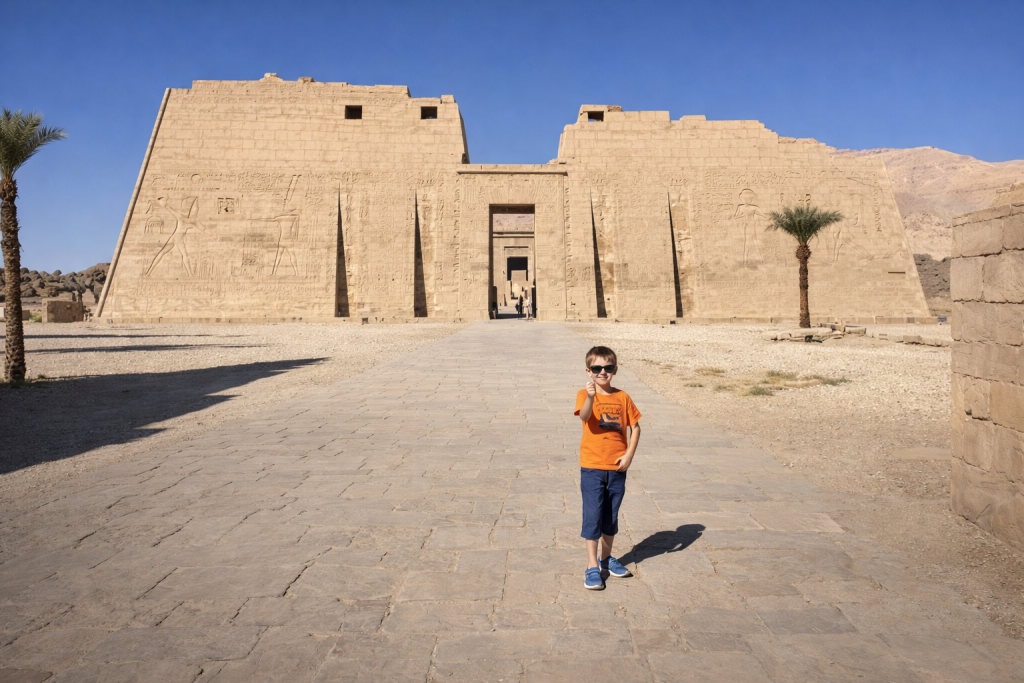
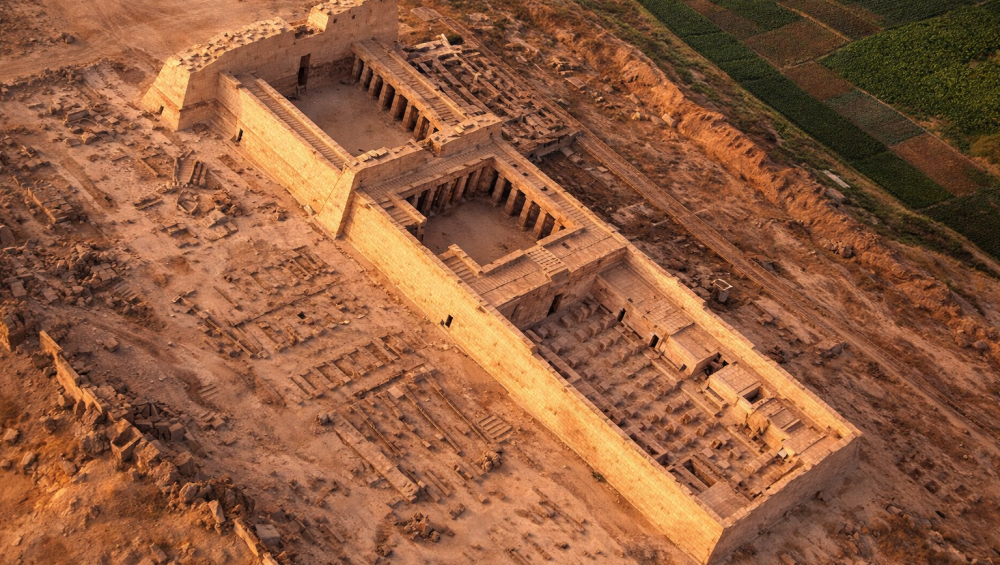
is unique because it looks like a military fortress.
Massive Pylons
The entrance to Medinet Habu is marked by enormous pylons decorated with battle scenes. The size alone makes visitors feel small — exactly how ancient Egyptians were meant to feel.
The First Courtyard
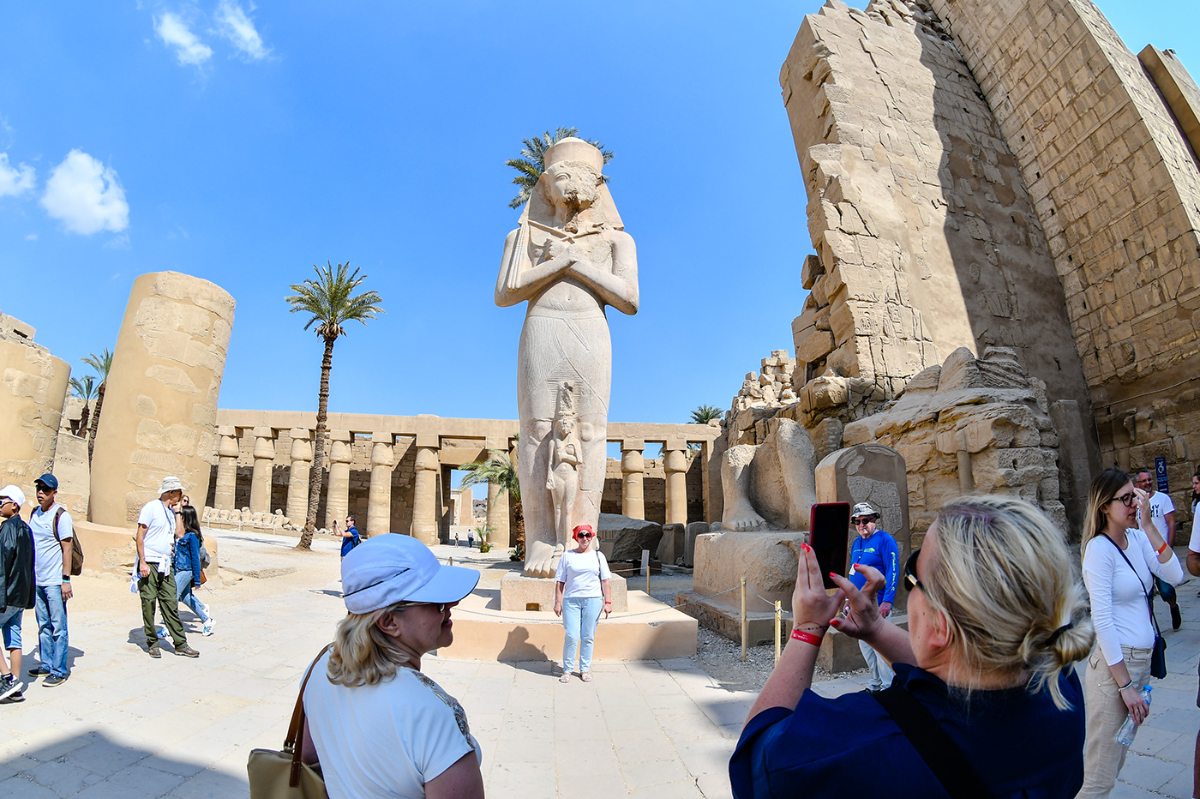
the first courtyard includes colossal statues of Ramses III. These statues show him in traditional pharaonic poses, symbolizing eternal strength.
The Second Courtyard
The second courtyard is surrounded by columns and reliefs showing religious ceremonies and offerings to the gods.
Hypostyle Hall
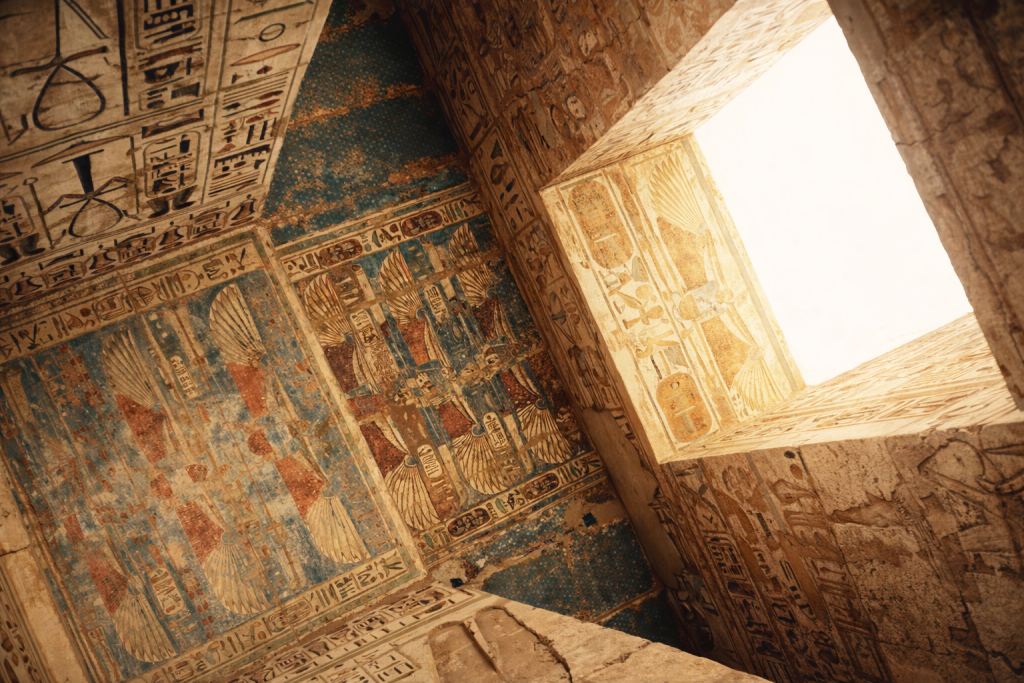
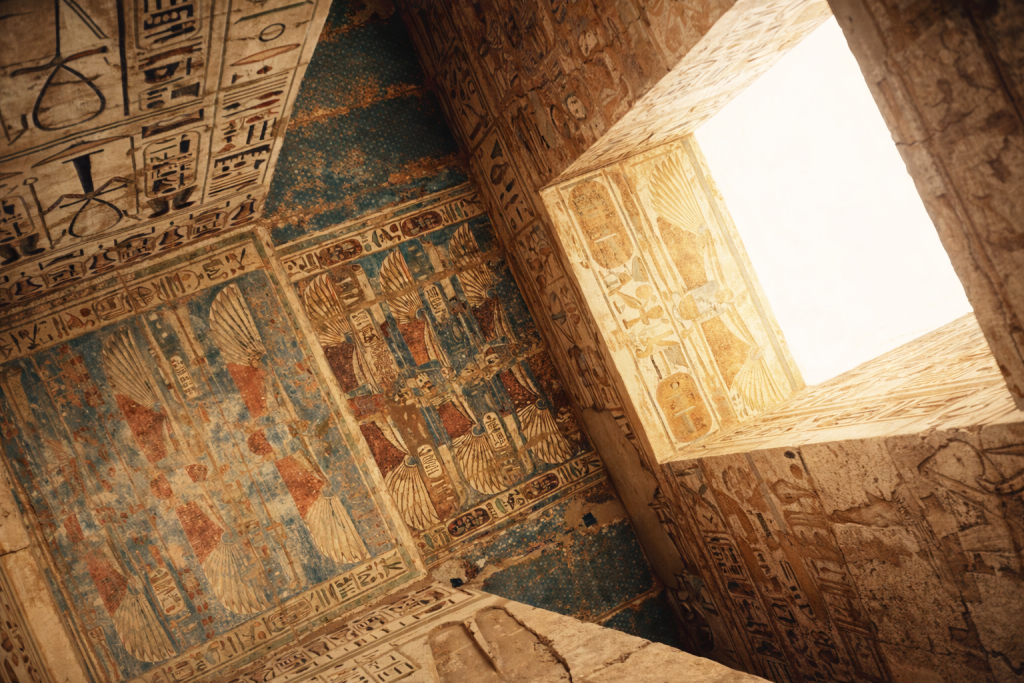
The hypostyle hall of Medinet Habu features towering columns covered in colorful carvings. Traces of original paint still survive today, making one of the most visually impressive temples in Egypt.
Why Medinet Habu is One of the Best-Preserved Temples in Egypt
Unlike many other ancient Egyptian temples, remains remarkably intact.
Reasons include:
- Its fortress-like design
- Thick protective walls
- Less exposure to flooding
- Less tourist pressure compared to Karnak
Because of this, offers visitors a more authentic and peaceful experience.
Religious Significance of Medinet Habu
was dedicated primarily to:
- Amun
- Mut
- Khonsu
The temple was an active religious center long after Ramses III died. Priests continued rituals for centuries.
The site was not abandoned quickly — it evolved over time, even being used during the Coptic Christian period.
Medinet Habu During the Coptic Period
Interestingly, was later used as a Coptic Christian settlement.
Some temple walls show evidence of Christian crosses carved into ancient stone. This unique layering of history makes even more fascinating.
Few sites in Egypt show such a clear transition between ancient Egyptian religion and early Christianity.
Visiting Medinet Habu Today
If you’re planning a trip to Luxor, should absolutely be on your itinerary.
Best Time to Visit
- Early morning (less heat)
- Late afternoon (golden lighting for photos)
Entry Ticket
is included in Luxor West Bank tour routes and is affordable compared to major attractions.
Photography Tips
is perfect for photography because:
- Wide open courtyards
- Detailed carvings
- Less crowded spaces
- Strong architectural lines
Medinet Habu vs Karnak Temple
Many travelers ask: Is Medinet Habu worth visiting if I already visited Karnak?
The answer is absolutely yes.
| Feature | Medinet Habu | Karnak |
|---|---|---|
| Crowds | Low | High |
| Preservation | Excellent | Partial |
| Battle Reliefs | Detailed | Limited |
| Atmosphere | Peaceful | Busy |
offers intimacy and clarity that larger temples cannot.
Hidden Secrets of Medinet Habu
hides fascinating secrets, including:
- Detailed economic records carved in stone
- Royal palace remains attached to the temple
- Storage rooms and priest quarters
- Defensive towers
This was not just a temple — it was a living complex.
Why Medinet Habu is Perfect for Cultural Tourism
For travelers seeking:
- Authentic experience
- Deep historical insight
- Fewer crowds
- Incredible photography
- is the perfect destination.
It combines religion, politics, architecture, and military history in one powerful location.
Travel Tips for Exploring Medinet Habu
- Wear comfortable shoes
- Bring water
- Hire a local guide for deeper understanding
- Allocate at least 1–2 hours
Rushing means missing its deeper meaning.
Final Thoughts – Why Medinet Habu Deserves More Attention
is one of Egypt’s most powerful yet underrated archaeological treasures.
It stands as:
- A monument to Ramses III
- A military record
- A religious center
- A fortress
- A symbol of endurance
If you want to experience ancient Egypt without overwhelming crowds, Medinet Habu is your answer.
It is bold.
It is dramatic.
It is unforgettable.
And once you walk through its massive pylons, you will understand why Medinet Habu is one of the greatest surviving monuments of the New Kingdom.