Why Amr Ibn Al-As Mosque Still Matters Today
The Amr Ibn Al-As Mosque is not just another historical landmark in Egypt. It is the first mosque ever built in Africa and one of the most significant Islamic monuments in the world.
Located in Old Cairo, this mosque represents the beginning of Islamic civilization in Egypt and stands as a powerful symbol of faith, history, and architectural evolution.
For travelers, historians, and spiritual seekers alike, the Amr Ibn Al-As Mosque offers an experience that blends sacred serenity with centuries of living history. Every column, every arch, and every corner whispers stories from the 7th century to the modern era.
The Historic Beginning of Amr Ibn Al-As Mosque
The Foundation in 641 AD
The Amr Ibn Al-As Mosque was built in 641 AD by the Muslim commander Amr Ibn Al-As after the Islamic conquest of Egypt. At the time, the area was known as Fustat, the first Islamic capital of Egypt.
The mosque originally started as a very simple structure made of mud bricks and palm trunks. It had no minaret, no mihrab in the modern sense, and no elaborate decorations. It was built purely as a place of prayer and gathering for the Muslim community.
Why It Was Built in Fustat
Fustat was strategically chosen as the new administrative capital instead of Alexandria. The mosque became the center of religious, political, and social life in the new Islamic city. From here, Islamic governance in Egypt began to take shape.
Architectural Evolution Through the Centuries
The current structure of the Amr Ibn Al-As Mosque is very different from its original form. Over the centuries, it underwent numerous expansions and reconstructions.
Umayyad and Abbasid Expansions
During the Umayyad and Abbasid periods, the mosque was expanded significantly. New sections were added, and architectural elements became more refined. Columns were brought from older Roman and Byzantine buildings.
Fatimid and Mamluk Influences
The Fatimid era introduced more decorative elements. Later, during the Mamluk period, the mosque was restored and beautified further. The introduction of minarets and more defined prayer niches added to its grandeur.
Ottoman Renovations
Under Ottoman rule, the mosque saw additional restorations, including structural reinforcements and aesthetic improvements that helped preserve it for future generations.
The Unique Architectural Features of Amr Ibn Al-As Mosque
The Amr Ibn Al-As Mosque is known for its simplicity combined with historical depth.
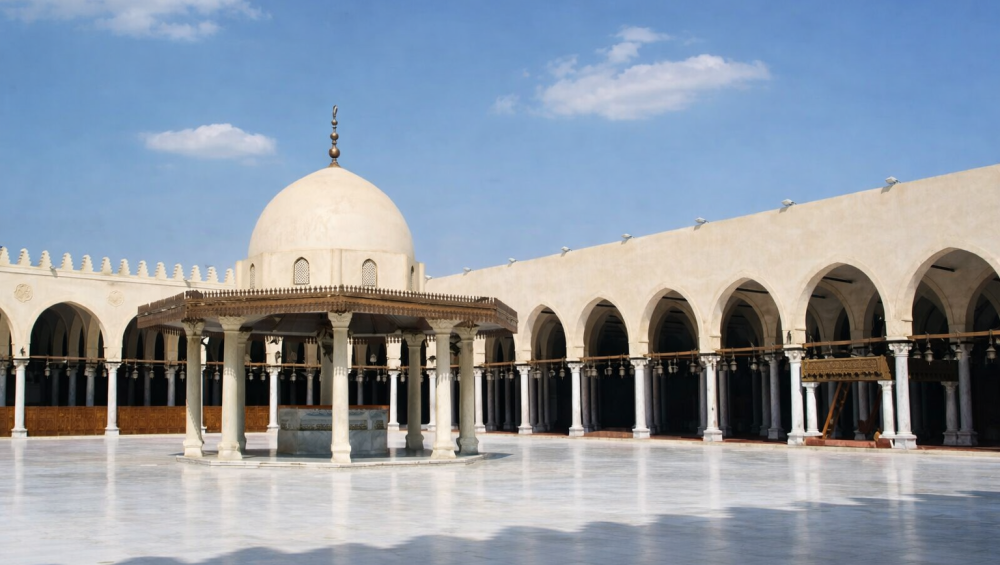
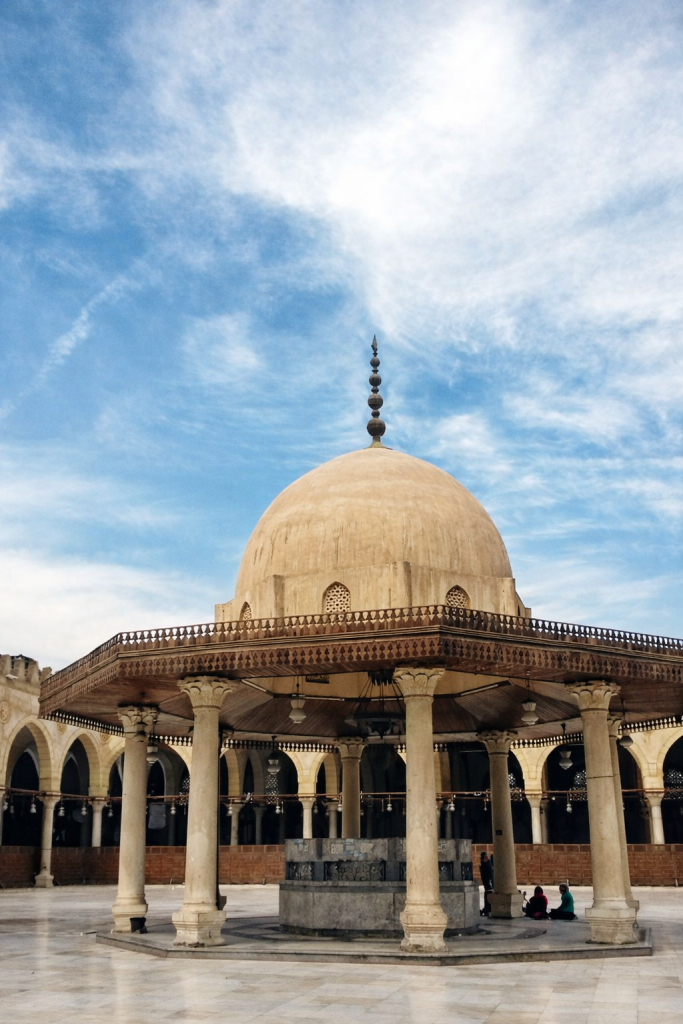
The Open Courtyard (Sahn)
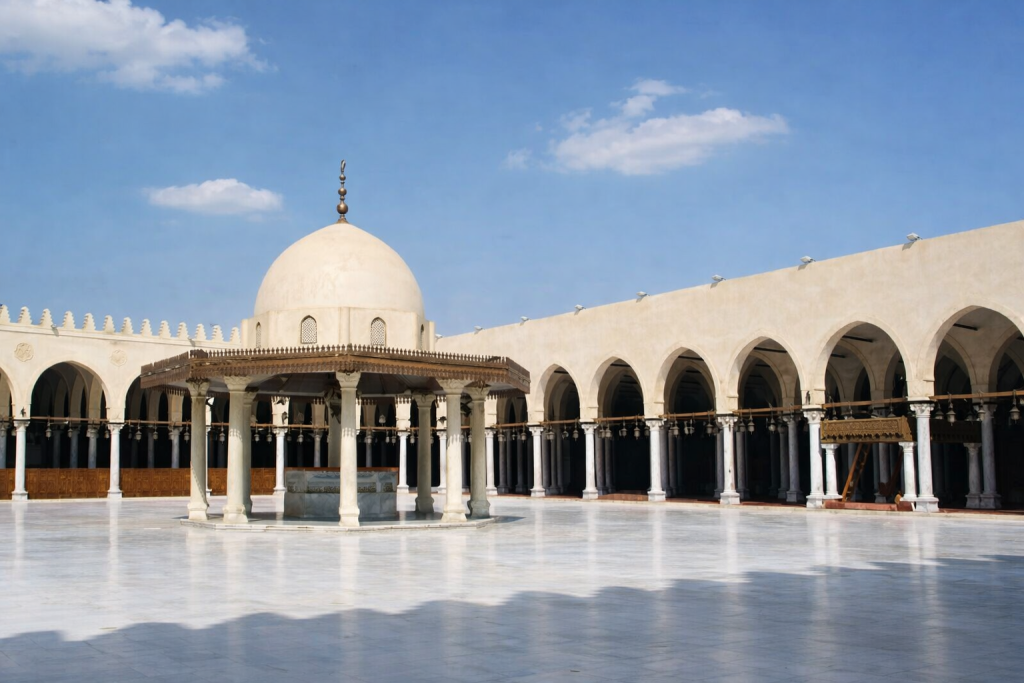
One of the most striking features is the wide open courtyard. This design allows natural light to fill the mosque, creating a peaceful spiritual atmosphere.
The Hypostyle Prayer Hall
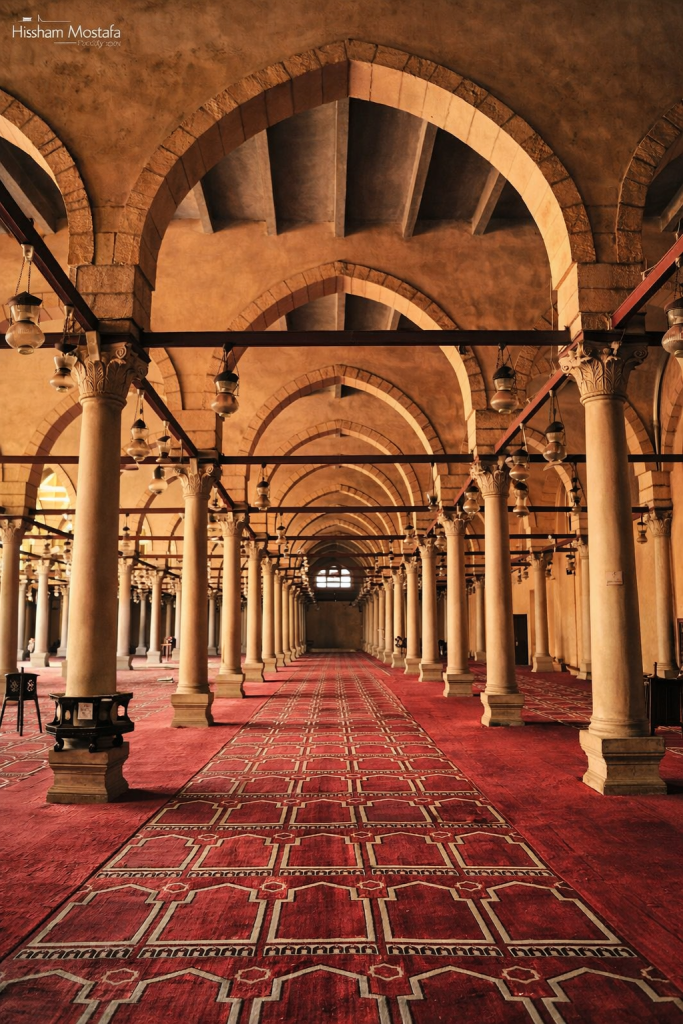
The mosque features a hypostyle hall supported by rows of columns. Many of these columns were reused from older buildings, making each one slightly different from the others.
The Mihrab and Minbar
The mihrab indicates the direction of Mecca. Over time, it evolved from a simple niche into a more decorative architectural element. The wooden minbar (pulpit) reflects Islamic craftsmanship traditions.
Religious and Educational Importance
A Center of Islamic Learning
For centuries, the Amr Ibn Al-As Mosque served as a center of education. Scholars taught Quran, Hadith, and Islamic jurisprudence here long before formal institutions were established.
Community and Social Role
Beyond prayers, the mosque functioned as a gathering space for discussions, announcements, and even judicial matters.
The Spiritual Atmosphere Inside the Mosque
Visitors often describe a unique sense of calm inside the Amr Ibn Al-As Mosque. Despite being located in a busy urban area, stepping inside feels like entering a different world.
The red carpets, symmetrical columns, and filtered daylight create a serene environment ideal for reflection and prayer.
Location in Old Cairo and Its Surroundings
The Amr Ibn Al-As Mosque is located in Old Cairo (Masr Al-Qadima), an area rich in religious diversity.
Nearby Attractions
- The Hanging Church
- The Coptic Museum
- Ben Ezra Synagogue
This makes the mosque part of a larger interfaith historical landscape, where Islamic, Christian, and Jewish heritage coexist.
The Mosque Through Political Changes
Throughout Islamic history, Egypt saw different dynasties and rulers. Despite wars, fires, and political shifts, the Amr Ibn Al-As Mosque remained a constant spiritual landmark.
It was rebuilt several times due to damage, but each reconstruction preserved its identity as the first mosque in Africa.
Modern Restoration and Preservation Efforts
In recent decades, the Egyptian government carried out major restoration projects to protect the mosque’s structure and architectural integrity.
These restorations aimed to:
- Strengthen foundations
- Preserve original columns
- Improve lighting and ventilation
- Maintain historical authenticity
Visiting Amr Ibn Al-As Mosque Today
Best Time to Visit
Morning hours offer a peaceful atmosphere and beautiful natural lighting for photography.
Dress Code
Modest clothing is required. Women should cover their hair, and both men and women should dress respectfully.
Photography Tips
The symmetrical rows of columns and arches create stunning visual perspectives. Wide-angle shots capture the architectural depth beautifully.
Why Amr Ibn Al-As Mosque Is a Must-Visit Landmark
The Amr Ibn Al-As Mosque is not just a religious site; it is a living monument that tells the story of Islamic Egypt from its very beginning.
It represents:
- The birth of Islamic architecture in Africa
- The foundation of Fustat
- A center of scholarship and spirituality
- A symbol of resilience through centuries
For tourists exploring Cairo, visiting the Amr Ibn Al-As Mosque offers a deeper understanding of Egypt beyond the pyramids and pharaonic temples.
The Enduring Legacy of Amr Ibn Al-As Mosque
More than 1,300 years after its foundation, the Amr Ibn Al-As Mosque continues to stand proudly in Old Cairo. It remains a place of prayer, learning, and historical reflection.
Its walls witnessed the transformation of Egypt from a newly conquered land into one of the most important centers of Islamic civilization.
From humble beginnings to architectural magnificence, the mosque’s journey mirrors the journey of Islamic Egypt itself.
Whether you are a traveler, a history enthusiast, or someone seeking spiritual tranquility, the Amr Ibn Al-As Mosque offers an unforgettable experience that connects the past with the present.