Introduction to the Nubian Village in Aswan
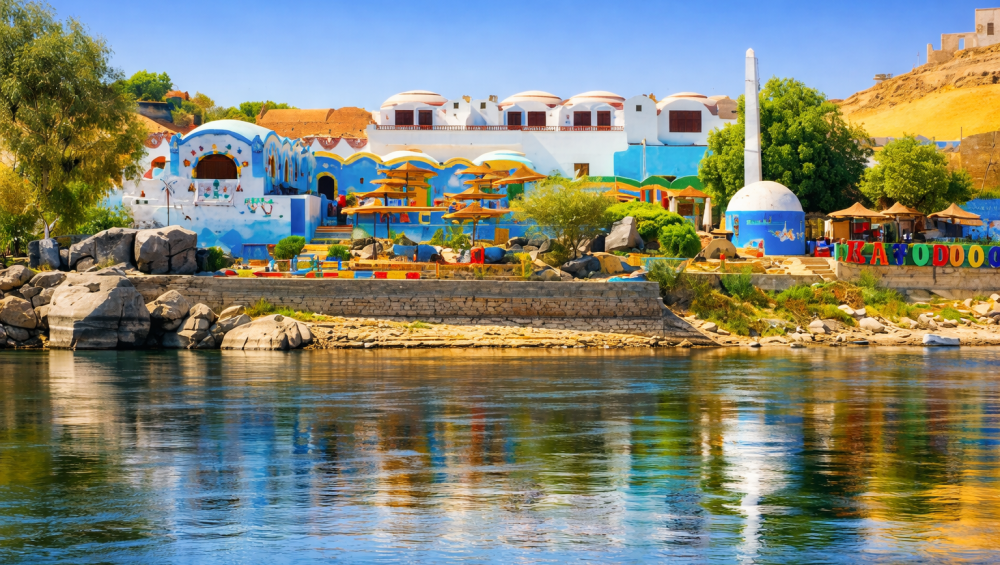
The is one of the most vibrant and culturally rich destinations in southern Egypt. Located along the banks of the Nile River near Aswan, this colorful village is a living museum of Nubian heritage, traditions, and hospitality.
Unlike ancient temples and archaeological sites, the Nubian Village in Aswan offers something different: a warm human experience. Here, visitors are welcomed into beautifully painted homes, offered traditional tea, and introduced to customs that date back thousands of years.
is not just a tourist attraction—it is a symbol of resilience, identity, and cultural pride.
Where Is the Nubian Village in Aswan Located?
is situated on the west bank of the Nile, near Elephantine Island and close to the area surrounding the Aswan High Dam.
To reach visitors typically take a traditional motorboat or felucca from the Corniche of Aswan. The boat ride itself is a magical experience, offering stunning views of golden sand dunes, palm trees, and small Nile islands.
The Fascinating History Behind the Nubian Village in Aswan
Who Are the Nubians?
The Nubians are one of the oldest civilizations in Africa. Historically, Nubia extended from southern Egypt into northern Sudan. The region was once home to powerful kingdoms such as the Kingdom of Kush.
Nubians have maintained their own language, music, architecture, and customs despite centuries of political changes.
The Impact of the Aswan High Dam
When the Aswan High Dam was built in the 1960s under President Gamal Abdel Nasser, many Nubian communities were displaced due to the creation of Lake Nasser.
As a result, thousands of Nubians relocated and rebuilt their homes in new areas, including the present-day Despite relocation, they preserved their traditions, language, and architectural style.
The Stunning Colors of the Nubian Village in Aswan
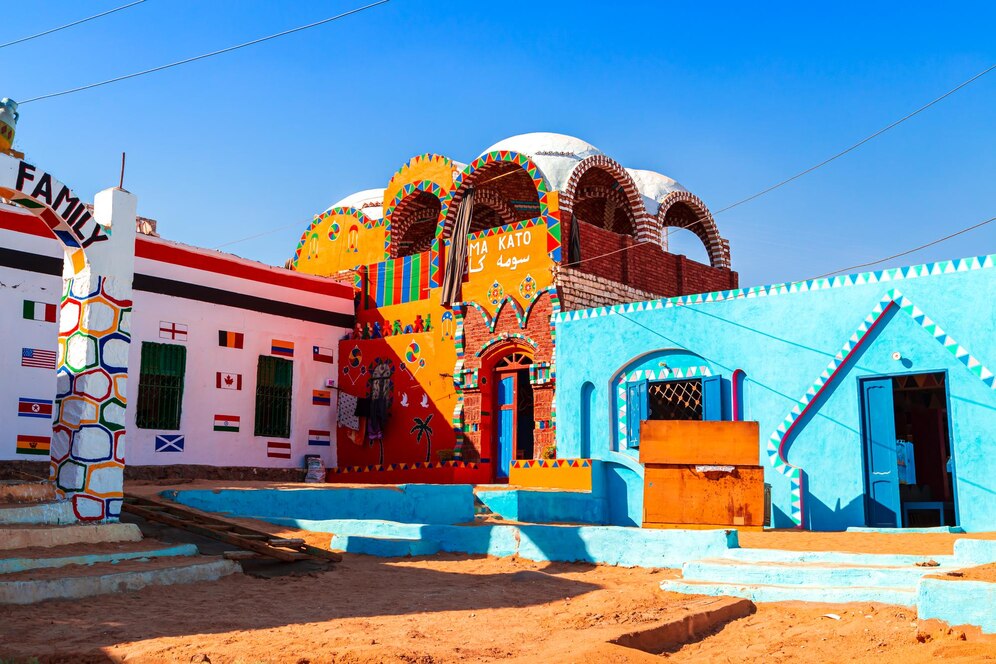
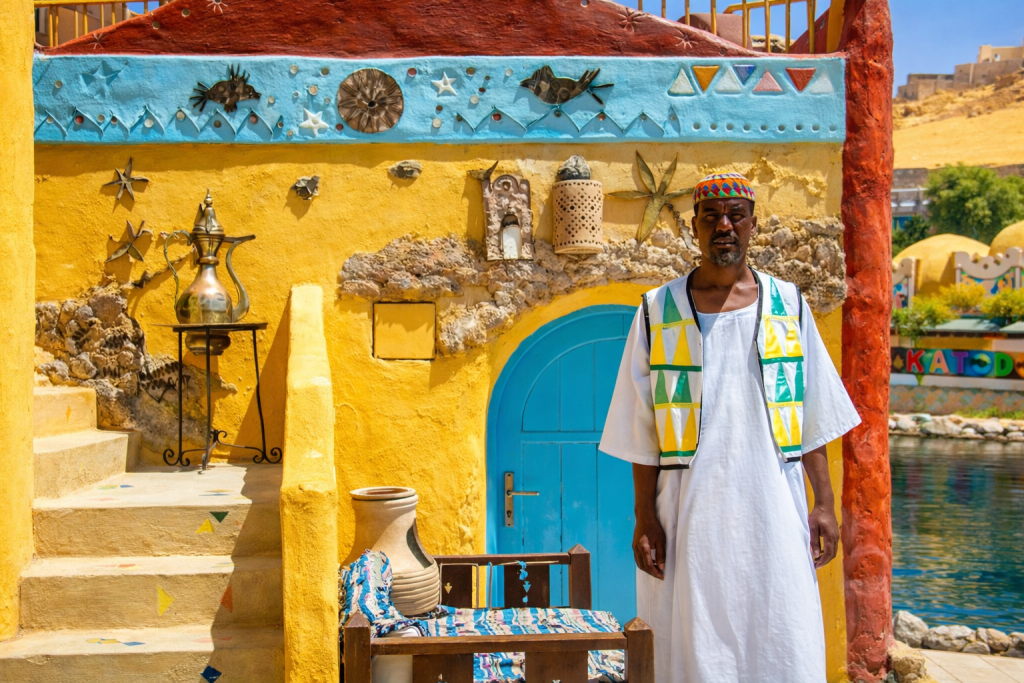
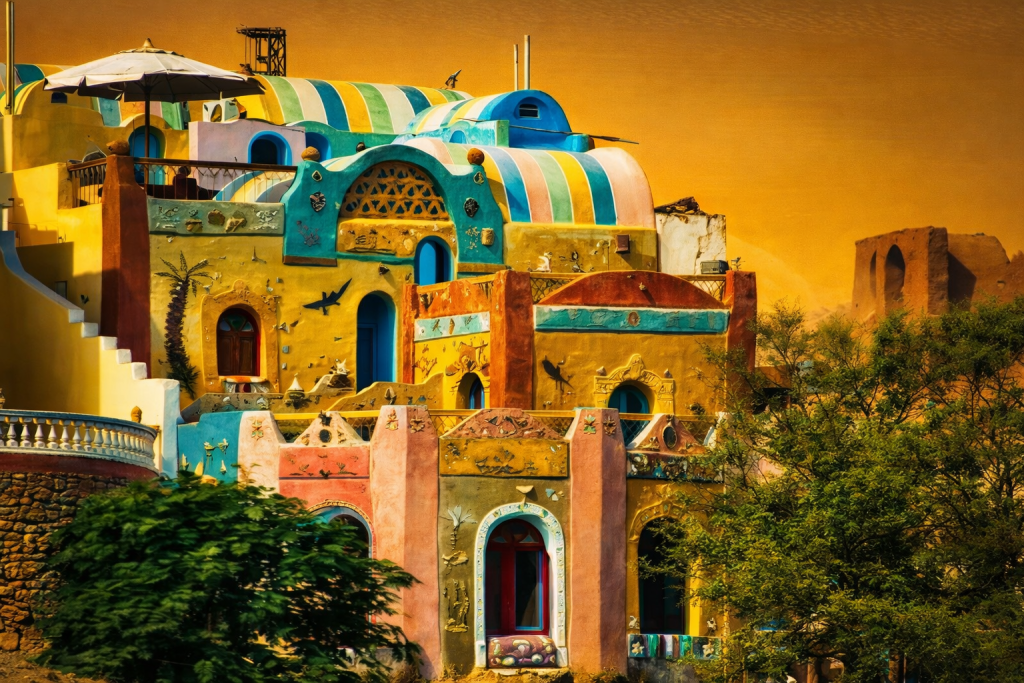
One of the most striking features of is its brightly painted houses. The walls are decorated with:
- Vibrant blues, yellows, and pinks
- Hand-painted symbols
- Traditional Nubian patterns
- Drawings of camels, birds, and the Nile
The architecture reflects both African and Islamic influences, with domed ceilings that help cool homes during the hot summer months.
Walking through the narrow streets of the Nubian Village in Aswan feels like stepping into a living art gallery.
Authentic Nubian Culture and Traditions
is famous for its strong community bonds and welcoming spirit.
Nubian Language
Many locals still speak Nubian languages alongside Arabic, preserving their cultural identity.
Traditional Music and Dance
Music is central to life . Traditional instruments include drums and tambourines, and celebrations often involve rhythmic dancing and singing.
Visitors may be invited to participate in musical evenings, especially during festivals or special occasions.
Incredible Nubian Cuisine You Must Try
Food is an essential part of the experience
Popular dishes include:
- Fatta with meat
- Grilled chicken with spices
- Fresh Nile fish
- Traditional Nubian bread
- Hibiscus tea (Karkadeh)
Meals are usually homemade and served in cozy guesthouses overlooking the Nile.
Unique Handicrafts and Souvenirs
Shopping in the Nubian Village in Aswan is a cultural experience.
You can find:
- Handmade jewelry
- Beaded necklaces
- Colorful scarves
- Handwoven baskets
- Painted pottery
Many items are crafted locally, helping support the community directly.
The Famous Crocodile Houses
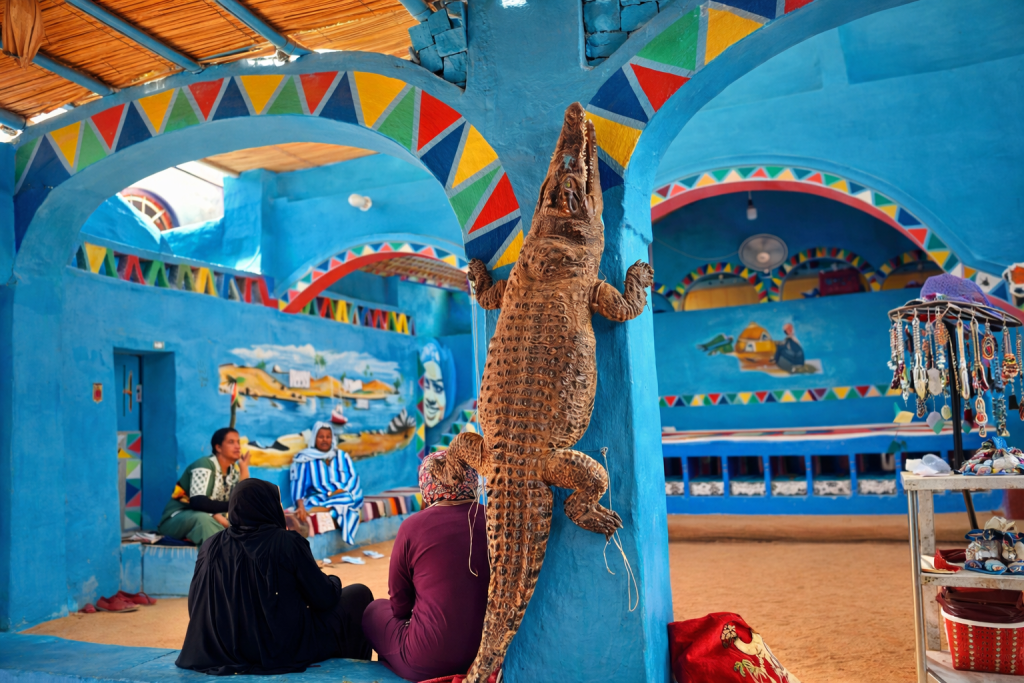
One of the most unusual attractions is the tradition of keeping small crocodiles. Some homes display preserved crocodiles as symbols of strength and protection.
This tradition dates back to ancient Egyptian beliefs associated with the crocodile god Sobek.
Why the Nubian Village in Aswan Is Perfect for Cultural Tourism
Unlike crowded historical sites, the Nubian Village in Aswan offers:
- Direct interaction with locals
- Authentic home visits
- Cultural immersion
- Peaceful Nile scenery
It is ideal for travelers looking for meaningful, responsible tourism experiences.
Best Time to Visit the Nubian Village in Aswan
The best time to visit the Nubian Village in Aswan is between October and April when temperatures are moderate.
Summer months can be extremely hot, but early morning or sunset visits are still enjoyable.
How to Reach the Nubian Village in Aswan
Visitors can reach Aswan by:
- Train from Cairo
- Domestic flights
- Nile cruises
From Aswan city, a boat ride of 20–30 minutes takes you directly to the Nubian Village in Aswan.
Tips for Visiting the Nubian Village in Aswan
- Respect local traditions
- Ask before taking photos
- Bring cash for shopping
- Wear comfortable clothing
- Support local businesses
The Role of the Nubian Village in Preserving Identity
The Nubian Village in Aswan represents cultural survival. Despite displacement and modernization, Nubians continue to celebrate their heritage proudly.
This village stands as a reminder that culture is not only preserved in temples and museums—but in people, homes, music, and daily life.
Why the Nubian Village in Aswan Should Be on Your Egypt Itinerary
If you are planning a trip to southern Egypt, combining visits to temples like Philae Temple with the Nubian Village in Aswan creates a perfect balance between ancient history and living culture.
The Nubian Village in Aswan offers something rare: a genuine human connection.
Conclusion
The Nubian Village in Aswan is more than colorful houses and beautiful Nile views. It is a living story of resilience, heritage, and hospitality. From its fascinating history and vibrant architecture to its music, cuisine, and traditions, the Nubian Village in Aswan delivers an unforgettable cultural experience.
For travelers seeking authenticity, warmth, and cultural depth, the Nubian Village in Aswan is truly one of Egypt’s hidden treasures.