Dendera Temple: An Ancient Egyptian Marvel That Captivates All
Nestled in the heart of Egypt, near the timeless Nile River, Dendera Temple stands as one of the most well-preserved temples in the world. This is not just an archaeological site—it is a window into the beliefs, astronomy, art, and architecture of Ancient Egypt.
1. Introduction to Dendera Temple
Also known as the Temple of Hathor, Dendera Temple is one of the most remarkable examples of Ptolemaic and Roman-era Egyptian architecture. Built to honor the goddess Hathor, this temple has preserved stunning wall carvings, astronomical ceilings, and sacred rituals that date back over 2,000 years.
The temple is located in the town of Dendera, about 60 km north of Qena in Upper Egypt, and it was a major religious center for pilgrims across the Nile Valley.
2. Location and Historical Significance
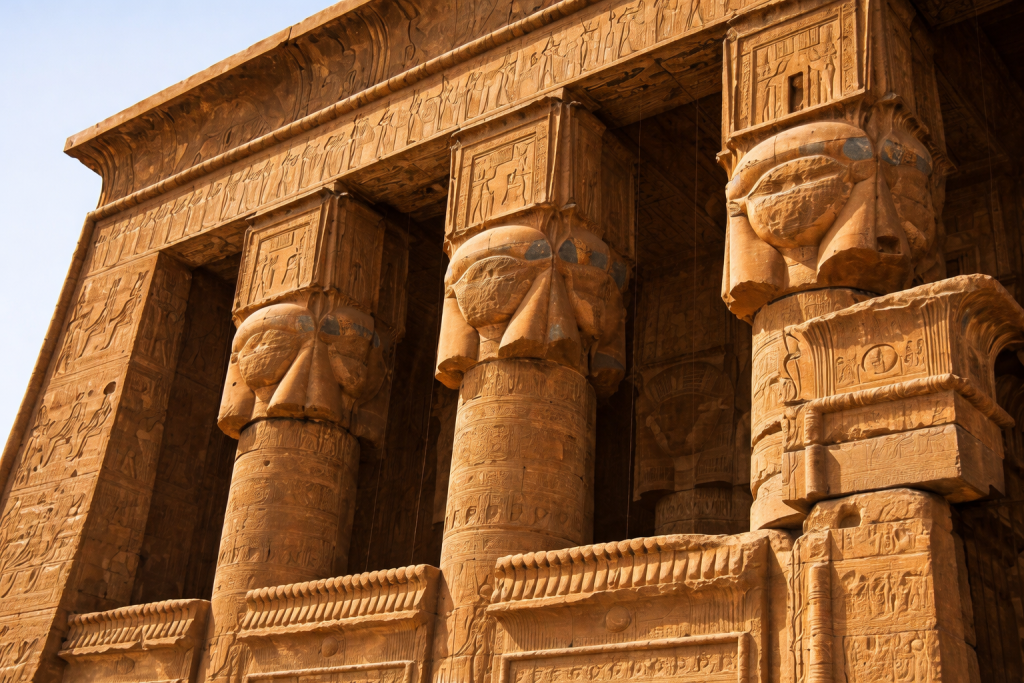
Dendera Temple sits on the western bank of the Nile, surrounded by fertile lands. Its strategic location made it a spiritual hub for worshipers. The temple was designed to align with cosmic and astronomical patterns, reflecting Ancient Egyptians’ belief in the connection between gods and the sky.
3. Hathor: The Goddess of Joy and Music
3.1 The Divine Role of Hathor
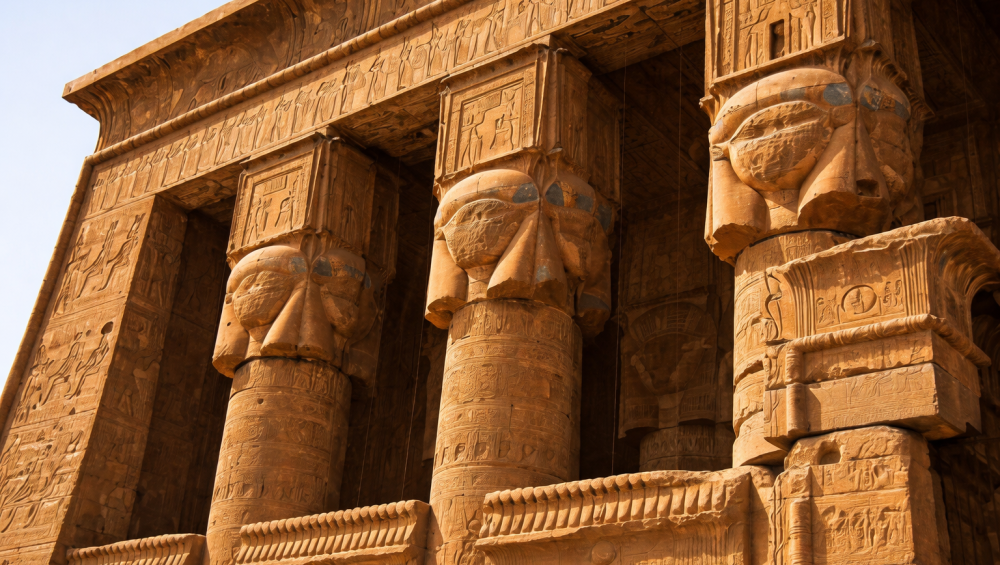
Hathor, the cow-headed goddess, symbolizes love, music, dance, fertility, and motherhood. She was revered as a protector of kings and a patron of joy and celebration. Representations of Hathor show her with cow ears or horns, often carrying a solar disk between the horns.
3.2 Hathor in Dendera Temple
Dendera Temple was dedicated to Hathor, and many of the temple’s walls depict her interacting with pharaohs and performing miracles, including giving life to the deceased in the afterlife.
4. Key Sections of Dendera Temple
The temple is expansive, featuring several major areas:
4.1 The Grand Entrance
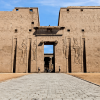
A monumental pylon decorated with vibrant hieroglyphics and reliefs, marking the transition from the mundane world into the divine realm.
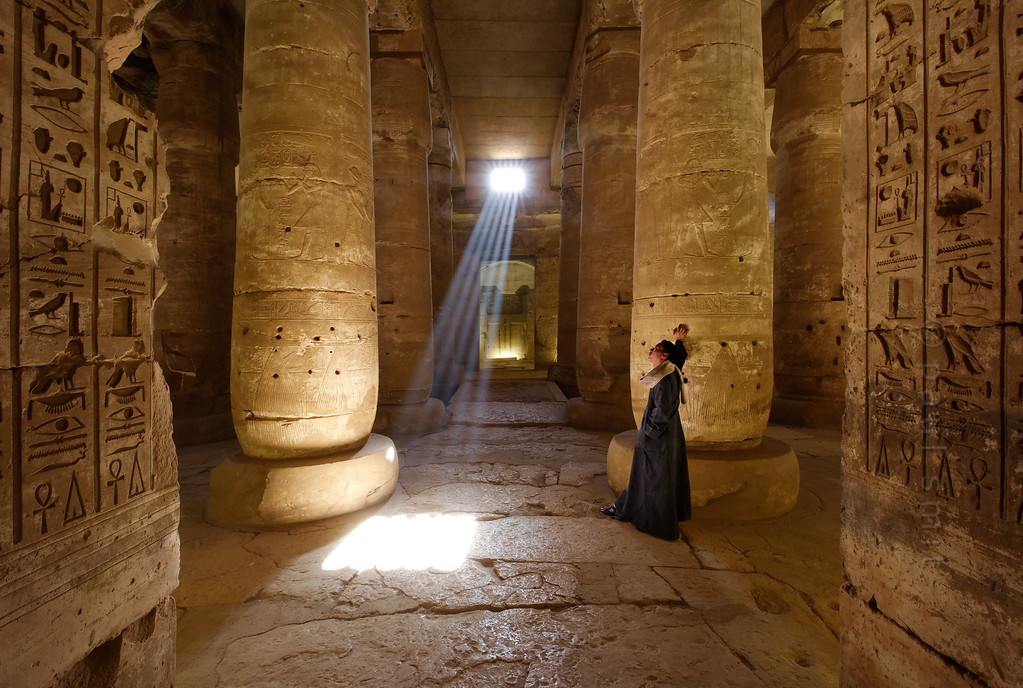
4.2 The Hypostyle Hall
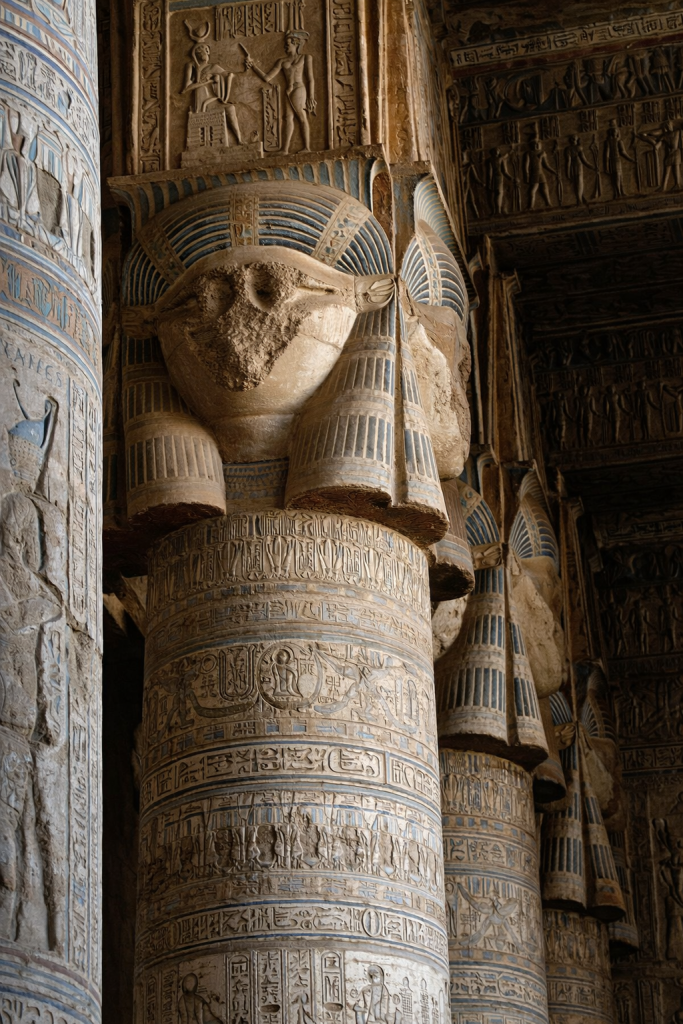
A massive hall filled with 24 towering columns, each carved with intricate scenes of gods, rituals, and sacred ceremonies.
4.3 The Sanctuary (Holy of Holies)
This was the most sacred area where the statue of Hathor was kept. Only priests were allowed inside to perform daily rituals and ceremonies.
5. Astronomical Ceilings and Egyptian Cosmology
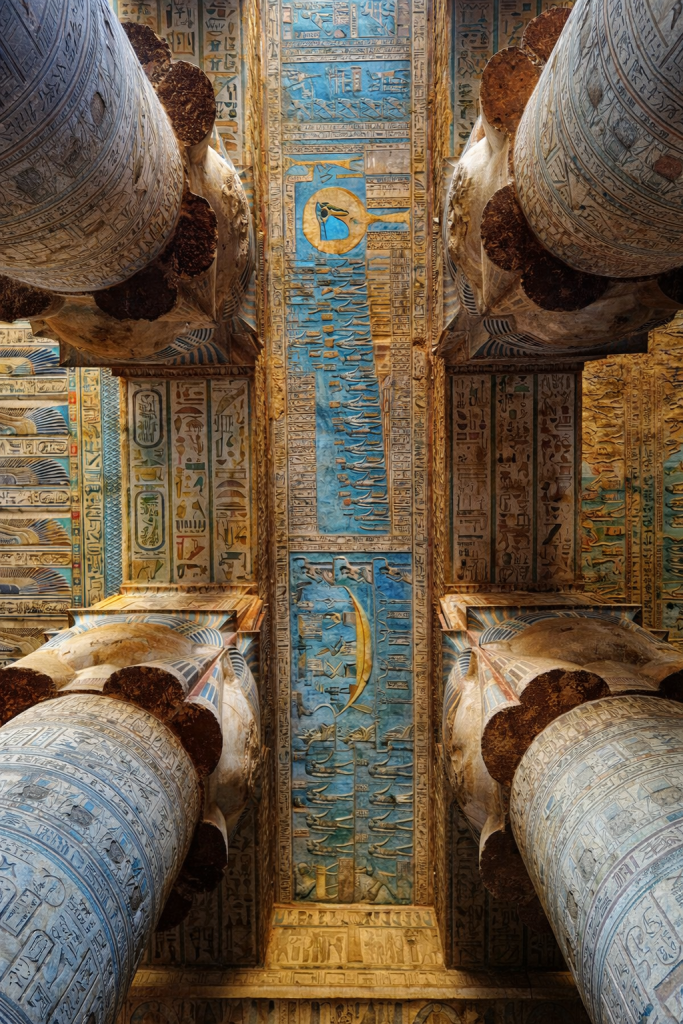
One of Dendera Temple’s most unique features is its celestial ceiling, which depicts:
- Planets such as Mercury, Venus, Mars
- Zodiac signs and constellations
- Cosmic diagrams tied to Egyptian religious festivals
These artworks demonstrate the advanced astronomical knowledge of the Ancient Egyptians and their integration of astronomy with religious life.
6. Famous Reliefs and Symbols
The temple walls are covered with symbolic reliefs and inscriptions, illustrating myths, celebrations, and daily life in Ancient Egypt.
6.1 Musical Celebrations
Many carvings depict musicians, dancers, and instruments used in religious ceremonies, highlighting the temple’s role as a center for joy and cultural celebration.
6.2 Creation Myths
Scenes representing the creation of the world, divine battles, and cosmic order are etched in vivid detail, offering insight into the Egyptian worldview.
7. Architecture and Design of Dendera Temple
Dendera Temple is a masterpiece of Ptolemaic architecture, featuring:
- Massive stone columns adorned with floral capitals
- Brightly painted walls with intricate hieroglyphics
- Careful alignment with the rising sun during solstices
Every detail, from the angles of the columns to the positioning of statues, holds symbolic meaning.
8. Archaeological Discoveries
8.1 The Dendera Zodiac
The famous Dendera Zodiac, a circular bas-relief representing constellations, was discovered on the ceiling of one of the temple’s chambers. It is a key artifact in understanding Egyptian astronomy.
8.2 Stone Statues and Relics
Archaeologists uncovered several statues and small stone carvings showcasing the exceptional skill of Egyptian sculptors and their dedication to religious art.
9. Nearby Temples and Tourism Importance
Dendera is part of a rich network of Egyptian temples:
- Abydos Temple
- Luxor Temples
- Saqqara monuments
Visiting these sites offers tourists a deep dive into the culture, religion, and history of Ancient Egypt.
10. Visiting Dendera Temple: Practical Guide
10.1 Best Time to Visit
The ideal months are:
- January to March
- September to November
These months offer moderate temperatures and pleasant sightseeing conditions.
10.2 Tips for Tourists
- Wear comfortable shoes
- Carry water and sun protection
- Hire a professional guide for in-depth historical insights
11. 10 Astonishing Facts About Dendera Temple
- Dendera Temple is one of the best-preserved temples in Egypt.
- Its ceilings contain rare astronomical depictions.
- Dedicated to Hathor, goddess of love and music.
- Constructed over multiple Ptolemaic and Roman periods.
- Hypostyle hall features 24 majestic columns.
- Served as a center for annual religious festivals.
- Influenced later temples with its astronomical designs.
- Contains secret chambers yet to be fully explored.
- Symbols and reliefs are studied in universities worldwide.
- Wall colors are remarkably intact even after 2,000 years.
12. Why Dendera Temple Remains a Symbol of Ancient Egyptian Civilization
The significance of Dendera Temple goes beyond its age. It represents a cultural, artistic, and astronomical legacy, showcasing the genius of a civilization that connected the heavens with earthly life.
Conclusion: A Timeless Message from the Past
Dendera Temple is not just stone and paint—it is a bridge between humanity and the divine, a message across millennia about the brilliance and spirituality of Ancient Egypt. Each carving, column, and ceiling tells a story that continues to inspire awe today.