Temple of Horus in Edfu – Egypt’s Best-Preserved Ancient Wonder
The Temple of Horus in Edfu stands as one of the most impressive and remarkably preserved monuments in all of Egypt. Located between Luxor and Aswan, this majestic temple offers visitors a rare opportunity to step directly into the religious and political world of ancient Egypt. Unlike many temples that were heavily damaged over centuries, the Temple of Horus in Edfu survived beneath layers of sand, which helped protect its walls, inscriptions, and architectural details.
Built during the Ptolemaic period, the temple was dedicated to Horus, the falcon-headed god of protection, kingship, and divine power. Today, it remains one of the most visited archaeological sites in Upper Egypt.
1. The Strategic Location
The Temple of Horus in Edfu is located on the west bank of the Nile in the city of Edfu. Its strategic placement between Luxor and Aswan made it an important religious center in ancient times.
Edfu was considered a sacred city where Horus defeated Seth, the god of chaos. This mythological importance gave the Temple of Horus in Edfu a central role in Egyptian religious traditions.
2. When Was the Temple of Horus in Edfu Built?
Construction began in 237 BC during the reign of Ptolemy III Euergetes I. The temple was completed in 57 BC under Ptolemy XII.
It took approximately 180 years to complete. Despite being built during the Greek Ptolemaic era, the architecture strictly followed traditional ancient Egyptian design principles.
3. The Massive Pylons – A Grand Entrance
The Symbolism Behind the Pylons
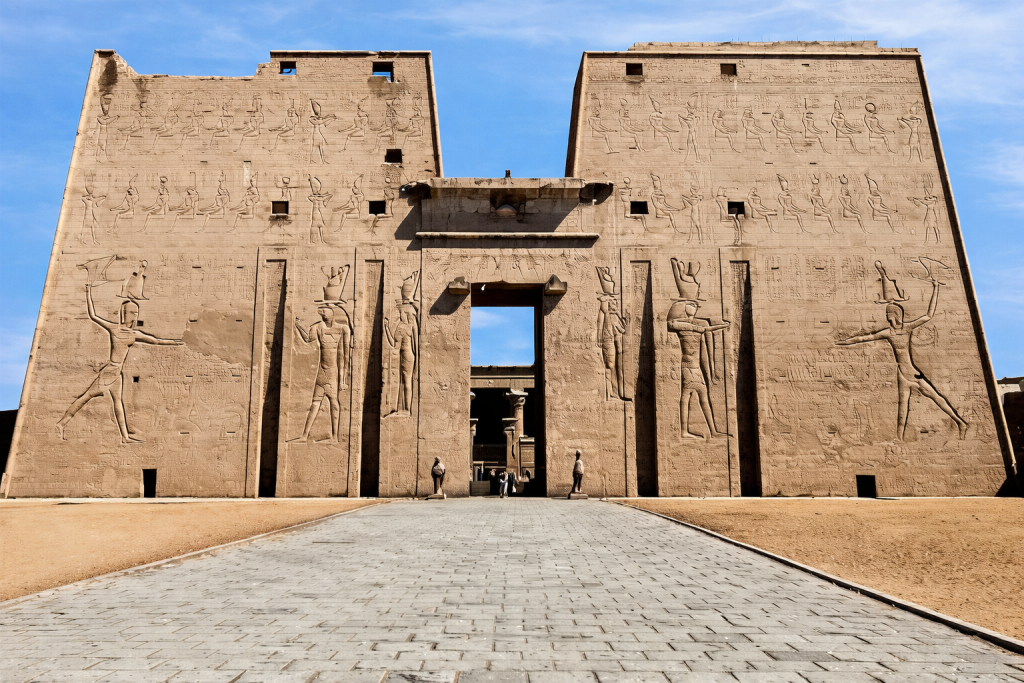
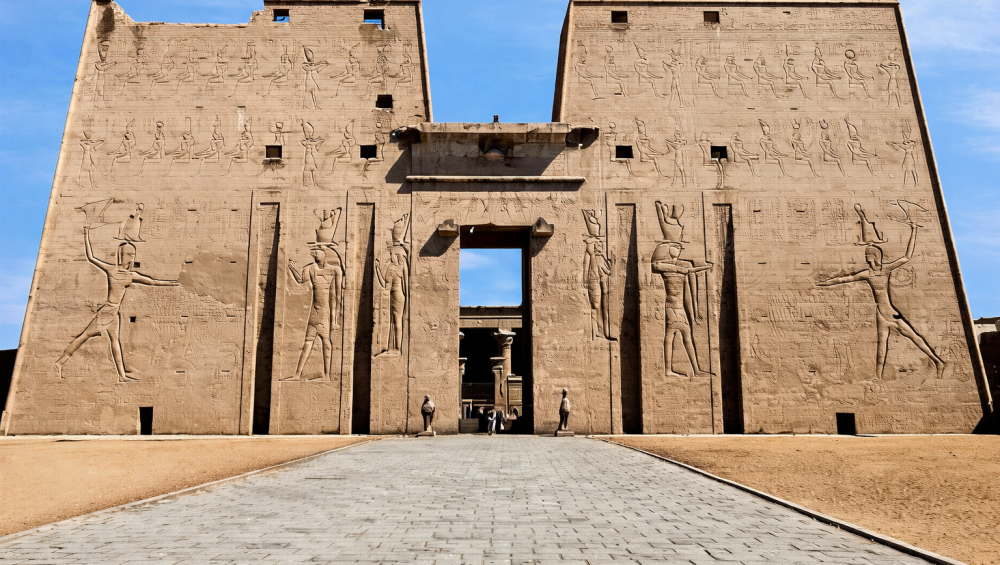
The towering pylons of the Temple of Horus in Edfu rise about 36 meters high. These massive entrance towers are decorated with scenes of the king defeating enemies before Horus.
The imagery symbolizes divine protection and royal authority. Visitors walking through these pylons experience the same powerful visual message that ancient Egyptians once did.
4. The Courtyard of Offerings
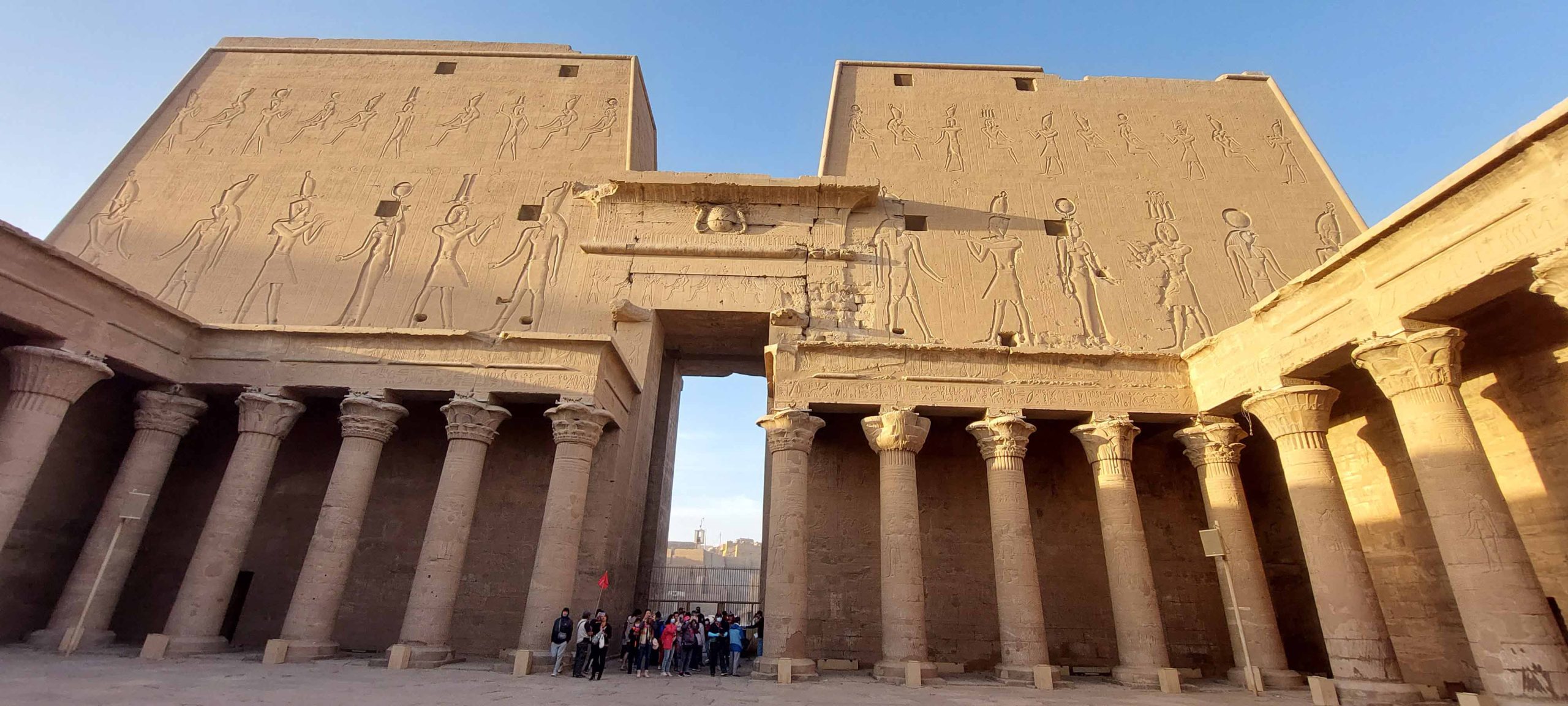
Beyond the entrance lies a large open courtyard surrounded by columns. This area was used for public religious ceremonies.
The Temple of Horus in Edfu was not only a place for priests but also for citizens who gathered here during major festivals.
5. The Hypostyle Hall – A Forest of Columns
Astronomical Ceilings and Sacred Inscriptions
The hypostyle hall contains towering columns decorated with floral capitals. The ceiling once displayed astronomical scenes representing the heavens.
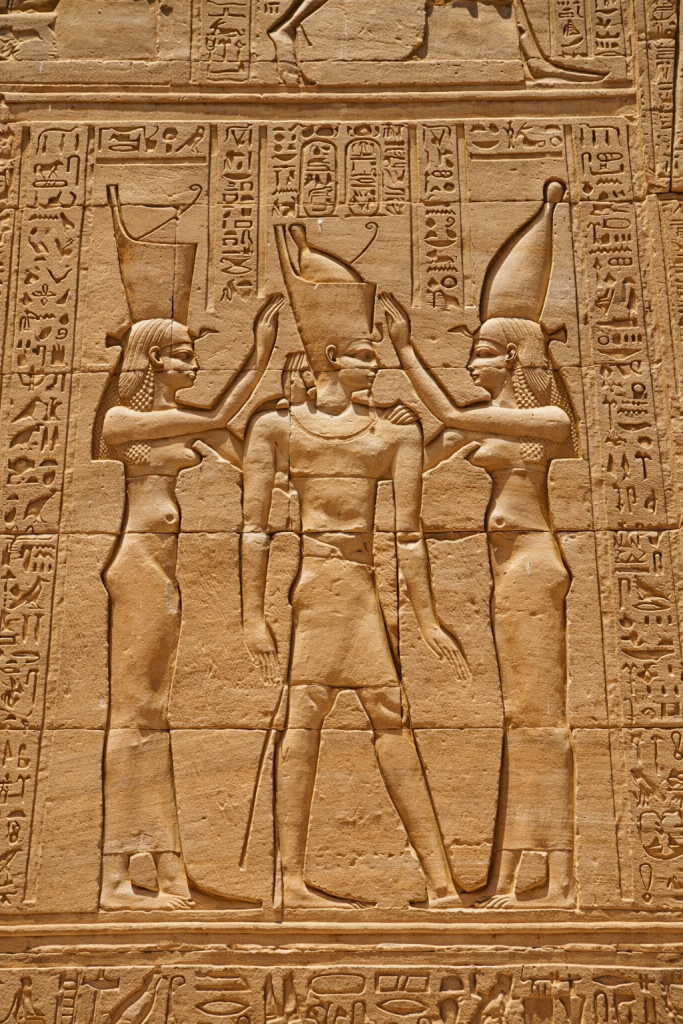
The walls are filled with detailed inscriptions that describe rituals, prayers, and sacred ceremonies performed inside the Temple of Horus in Edfu.
6. The Sanctuary – The Heart of the Temple
At the center lies the sanctuary, the most sacred part of the Temple of Horus in Edfu.
Inside stands a granite shrine that once held the golden statue of Horus. Only high priests and the pharaoh were allowed to enter this chamber.
7. The Myth of Horus and Seth
One of the most fascinating aspects of the Temple of Horus in Edfu is the detailed inscriptions describing the epic battle between Horus and Seth.
These texts are among the most complete mythological records found in any Egyptian temple. They explain how Horus avenged his father Osiris and restored order to Egypt.
8. Annual Festivals and Religious Ceremonies
The Temple of Horus in Edfu played a key role in the “Beautiful Meeting” festival.
During this annual celebration, the statue of Hathor traveled from Dendera to meet Horus in Edfu. This symbolic reunion represented divine harmony and fertility.
9. Architectural Perfection and Symmetry
Traditional Egyptian Design
The Temple of Horus in Edfu follows classic Egyptian temple layout:
- Pylon entrance
- Open courtyard
- Hypostyle hall
- Sanctuary
This strict alignment reflects cosmic order and religious precision.
10. Hidden Chambers and Passageways
The temple contains numerous side chambers used for storing ritual objects, incense, and sacred texts.
Some rooms were dedicated to specific ceremonies and purification rituals carried out by priests.
11. Why the Temple of Horus in Edfu Is So Well Preserved
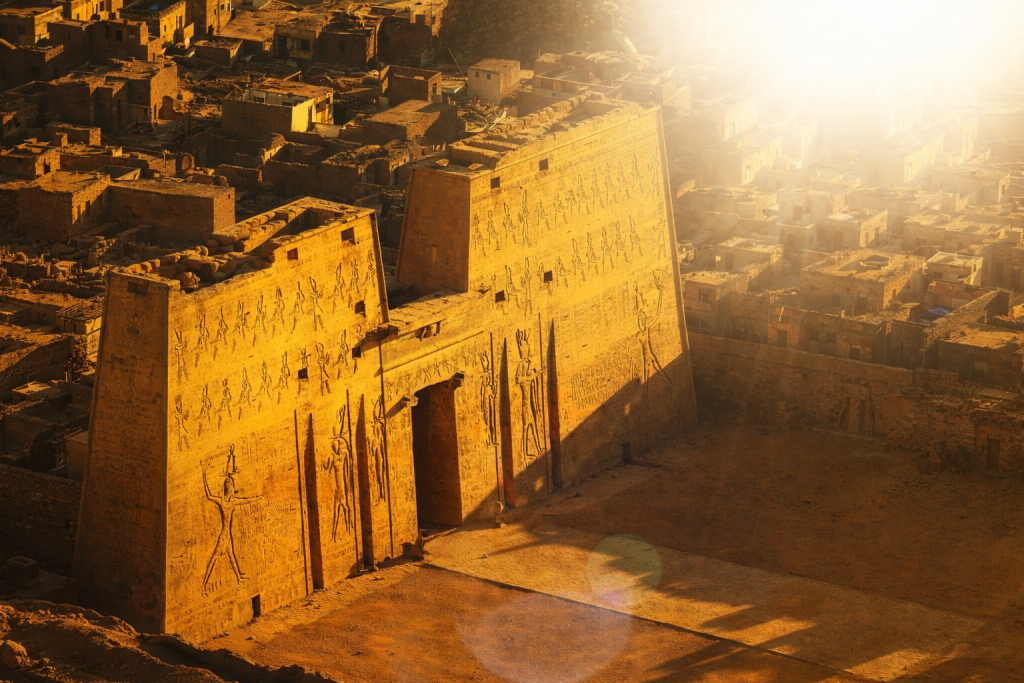
For centuries, the Temple of Horus in Edfu was buried under sand and Nile silt. Local houses were even built on top of it.
When French Egyptologist Auguste Mariette began excavations in the 19th century, the temple was revealed almost intact.
This natural protection explains why it remains Egypt’s best-preserved ancient temple.
12. Visiting the Temple of Horus in Edfu Today
Today, the Temple of Horus in Edfu is a highlight of Nile cruises between Luxor and Aswan.
Visitors can:
- Walk through the massive pylons
- Explore detailed carvings
- Photograph falcon statues of Horus
- Discover ancient myths carved in stone
It provides one of the most immersive ancient Egyptian experiences available.
The Cultural Importance of the Temple of Horus in Edfu
The Temple of Horus in Edfu is more than just stone walls and carvings. It represents political propaganda, religious devotion, architectural genius, and mythological storytelling.
Its inscriptions serve as historical documents preserving rituals, festivals, and theological beliefs that shaped ancient Egyptian civilization.
Architectural Highlights of the Temple of Horus in Edfu
- 36-meter-high pylons
- Massive granite naos
- Falcon statues at the entrance
- Intricate hieroglyphic inscriptions
- Nearly complete temple structure
Each section reflects careful planning and symbolic meaning.
Why the Temple of Horus in Edfu Is a Must-Visit in Upper Egypt
If you are planning a trip to Upper Egypt, the Temple of Horus in Edfu should be at the top of your list.
Unlike many ruins, this temple allows visitors to truly understand how an ancient Egyptian temple functioned. Its preservation, scale, and historical importance make it one of the most extraordinary monuments in Egypt.
Conclusion: The Timeless Power of the Temple of Horus in Edfu
stands as a breathtaking reminder of Egypt’s spiritual and architectural brilliance. From its colossal pylons to its sacred sanctuary, every corner tells a story of power, faith, and mythology.
More than 2,000 years after its construction, the Temple of Horus in Edfu continues to captivate historians, travelers, and culture lovers from around the world.
It is not just a monument — it is a living legacy carved in stone.